Laser Hair Removal: Why It Takes a Series, and What Permanent Really Means
Laser hair removal is one of the most asked-about treatments at Aetheria Aesthetics & Wellness™ in Pittsburgh’s North Hills, and the questions are always the same two: how many sessions, and is it permanent. Both answers come from the same place, the biology of how hair grows. Here is a plain guide from Melissa Kolowitz, PA-C.
The simple physics
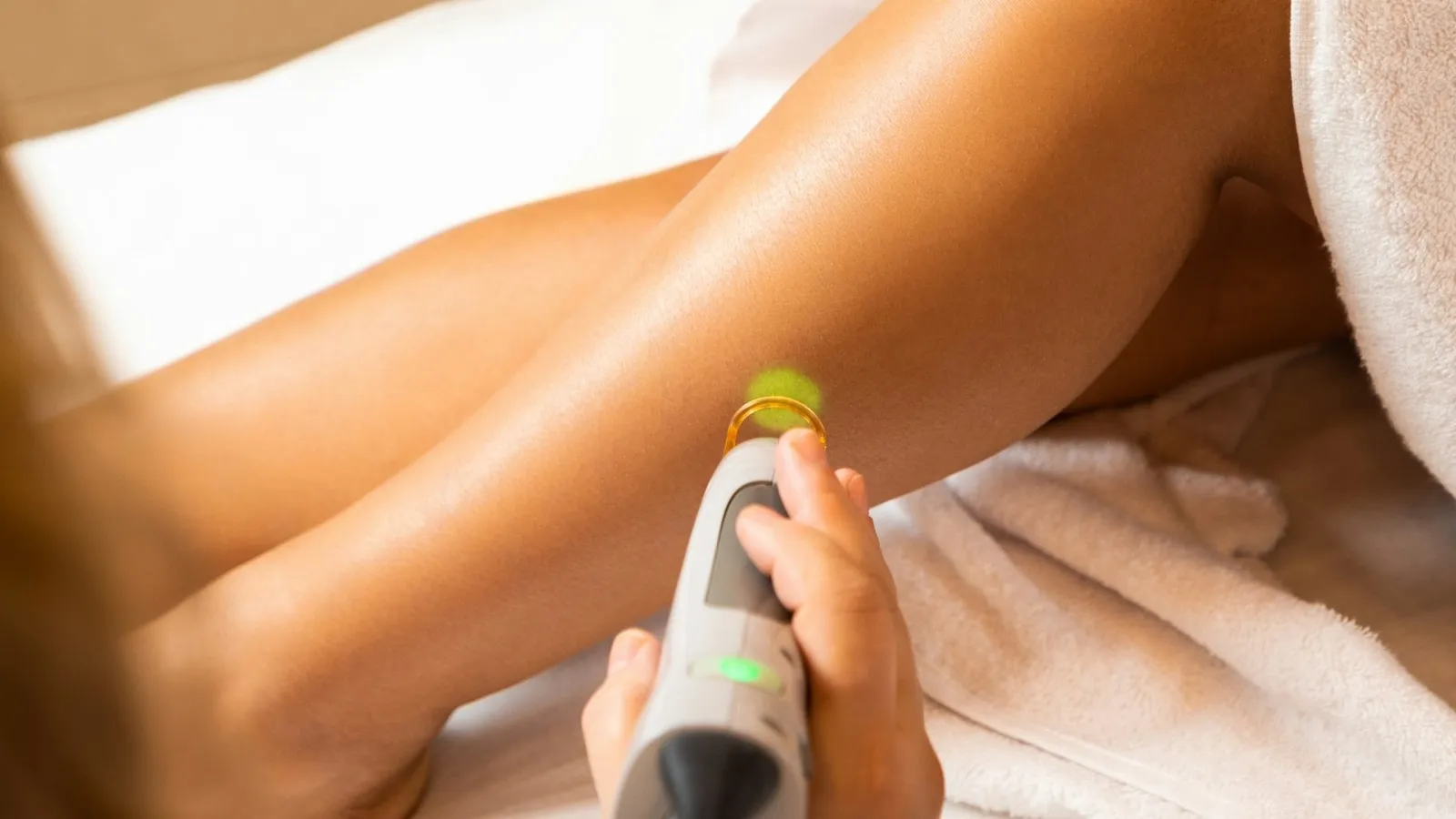
Hair pigment absorbs light. Each pulse of the laser sends light energy down the hair shaft to the follicle, where it converts to heat and disables the follicle’s ability to regrow. The surrounding skin, which holds far less pigment than the hair, stays out of the exchange, and the built-in cooling on the Prestige HR system we use keeps the skin comfortable throughout.
That pigment dependence explains most of what you need to know about candidacy. Darker hair absorbs more energy and responds best. White, gray, and some very light blonde or red hair hold too little pigment for the laser to act on, and we will tell you that up front.
Why one session is never enough
At any given moment, only a fraction of your hair follicles are in their active growth phase, and only actively growing hairs are connected to the follicle in a way that lets the laser do its work. The rest are resting or shedding, and they simply do not respond that day.
That is the entire reason laser hair removal is a series. Sessions spaced four to six weeks apart catch each new wave of follicles as it becomes active. Over six to eight sessions, the waves run out. Skipping sessions or stretching the gaps does not save money; it just lets follicles cycle through untreated. The cadence is the treatment.
What a session is like
You shave the area a day or so before your visit, so the energy reaches the follicle rather than burning off hair above the skin. Waxing and plucking are paused for several weeks beforehand, because they remove the very pigment the laser needs. During the session you feel a light snapping, like a small rubber-band flick, moderated by continuous cooling. Most areas take 15 to 30 minutes, and most patients go straight back to their day, simply keeping the area out of direct sun.
Over the following weeks the treated hairs shed, and what regrows comes in finer and sparser.