

Ross Township · Pittsburgh's North Hills · Peptide Therapy
Peptide Therapy. In Pittsburgh's North Hills.
Designed for adults considering peptide pathways (NAD+, sermorelin, ipamorelin, tesamorelin, GHK-Cu) as part of a lab-driven approach to metabolic health, recovery, body composition support, and cellular wellness. With Melissa Kolowitz, PA-C.
Our Approach to Peptide Therapy
Peptides are not interchangeable.
And they are not a default stack.
The right peptide for you is the one your labs and your clinical history actually point to. Peptide therapy involves prescription medications; all treatment decisions are made at consultation with Melissa Kolowitz, PA-C, based on your individual clinical history.
Clinical Summary
Peptide therapy uses short chains of amino acids that signal specific biological pathways (recovery, sleep quality, body composition, cellular energy) under clinical supervision. Aetheria's pathways center on well-characterized peptides such as sermorelin, tesamorelin, NAD+, and GHK-Cu, selected from your lab work and clinical history rather than wellness trends. The program is provider-led: Melissa Kolowitz, PA-C reviews baseline labs, matches the pathway to what your biology actually points to, and monitors response at follow-up. Peptides involve prescription medications, and honest framing matters: they are adjuncts to sleep, nutrition, and training, not replacements for them, and some patients leave consultation with no peptide at all. Most pathways run in cycles of several weeks with periodic reassessment at the Pittsburgh North Hills studio. Candidacy, selection, and dosing are clinical decisions made at consultation. Individual results vary.
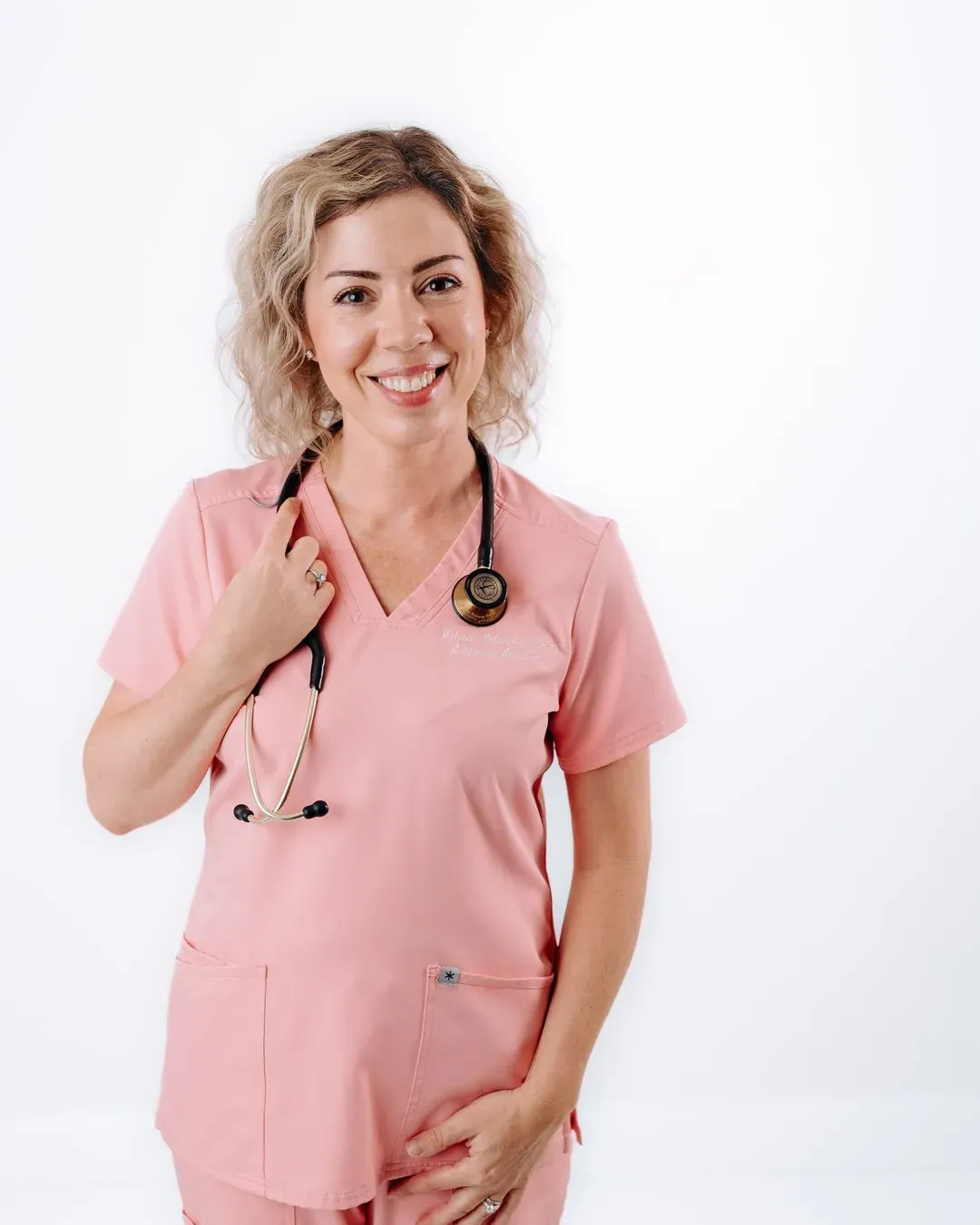
Clinical care, not a stack.
Peptides are short chains of amino acids that signal specific cellular processes. The peptides used clinically today fall into a few well-studied families: growth hormone secretagogues like sermorelin and ipamorelin, regulatory peptides like tesamorelin, copper-binding peptides like GHK-Cu, and dietary precursors like NAD+. Each one signals something different. None of them is a generic wellness supplement, and none of them belongs in a default stack. At Aetheria, peptide therapy is in-person clinical care for adults considering peptide pathways as part of a lab-driven approach to metabolic health, recovery, body composition support, and cellular wellness. The pathway is selected based on what your labs and clinical history actually show, not a generic stack you saw online. The decisions about which peptide, what dose, what cadence, and how long are made by Melissa Kolowitz, PA-C, with 20+ years of clinical and surgical experience and advanced certifications in medical aesthetics, neurotoxin treatments, dermal fillers, complication avoidance, and medical weight loss.
Start Your AssessmentThe Peptides We Offer at Aetheria
Each peptide signals something different.
| Attribute | NAD+ | Sermorelin | Ipamorelin | Tesamorelin | GHK-Cu |
|---|---|---|---|---|---|
| Family | Cellular precursor | Growth hormone secretagogue | Growth hormone secretagogue | Growth hormone-releasing hormone analog | Copper-binding tripeptide |
| Designed for adults concerned about | Cellular wellness, energy, and metabolic health support | Body composition support, sleep quality, and recovery | Body composition and recovery, with more selective signaling than sermorelin | Visceral fat considerations (FDA-approved for HIV-related lipodystrophy; commonly used off-label for visceral fat pathways) | Tissue support, skin quality considerations, healing support |
| Format | IV infusion or subcutaneous injection | Subcutaneous injection | Subcutaneous injection | Subcutaneous injection | Subcutaneous injection or topical formulation |
| Typical cadence | Weekly to monthly, varies by pathway | Daily, typically before bed | Daily, often paired or alternated with sermorelin | Daily | Varies by pathway and goal |
Who Peptide Therapy Is Designed For
Specific clinical situations, not a wellness add-on.
On a GLP-1, wanting body composition support
Designed for adults already on semaglutide or tirzepatide who want sermorelin, ipamorelin, or tesamorelin pathways matched to their body composition tracking.
Concerned about cellular and metabolic wellness
Designed for adults whose labs suggest candidacy for NAD+ support supporting cellular function and metabolic markers.
Considering visceral fat pathways
Designed for adults whose labs and imaging suggest visceral fat is part of their clinical picture. Tesamorelin pathways are reviewed where appropriate.
Considering recovery or sleep support
Designed for adults whose sleep quality, recovery, or body composition has shifted with age or activity level, where sermorelin or ipamorelin pathways may be appropriate.
Considering tissue support pathways
Designed for adults concerned about skin quality, healing after procedures, or general tissue support, where GHK-Cu pathways may be relevant.
Wanting in-person clinical care
Designed for adults who want lab-driven peptide pathways with in-person follow-up, not a mail-order stack.
Peptide pathways are appropriate for specific clinical situations, not as a generic wellness add-on.
Metabolic Health
How peptide therapy fits in.
Peptide therapy at Aetheria is part of the broader Metabolic Health program. It is not a standalone wellness service we add to every patient by default. The right way to think about peptides is as one component of a clinical plan built around your labs, your goals, and what is appropriate for your physiology.
Alongside GLP-1 weight loss
Many patients on semaglutide or tirzepatide consider sermorelin or ipamorelin for body composition support during active loss. Tesamorelin pathways are reviewed for adults whose labs suggest visceral fat is part of the picture. NAD+ supports cellular wellness throughout.
The peptide pathway is paced with your GLP-1 cadence; we do not simply layer them.
Before or without a GLP-1
Some patients begin peptide therapy without ever starting a GLP-1. NAD+ is often a first conversation for adults whose labs suggest a candidacy for cellular support.
Sermorelin or ipamorelin may fit for adults concerned about recovery or sleep quality unrelated to weight care.
After significant weight loss
Long-term Metabolic Health often includes continued peptide pathways matched to your follow-up labs.
Body composition support, recovery, and cellular wellness continue to matter long after active weight care has settled.
Alongside aesthetic continuity care
GHK-Cu is sometimes considered for adults pursuing Sculptra, Morpheus8 Burst, or Quantum RF where tissue support fits the clinical picture.
The sequence is collaborative. The decisions are made in consultation, based on your labs and what you are looking for, not from a default stack.
Why Aetheria for Peptide Therapy
The clinical difference.
One provider, every visit
Same clinician, same plan, same clinical eye every time. At Aetheria, every peptide therapy visit is with Melissa. Always Melissa. The clinical history we build at the first consultation informs every pathway decision through the course of your care.
Lab-driven decisions, not default stacks
Baseline and follow-up labs inform peptide selection. We do not add NAD+ to every patient, prescribe sermorelin without indication, or layer peptides because they are popular.
Honest about candidacy
If your labs and clinical history do not suggest a peptide pathway is right for you, you will hear that. If a different intervention is a better fit, you will hear that too.
Conservative doses, paced adjustments
Conservative starting doses with paced adjustments. Peptide pathways are titrated to clinical response, not maximum tolerated dose.
Integrated Metabolic Health care
Integrated with the full Aetheria Metabolic Health program. Peptide therapy connects to GLP-1 care, nutritional and supplement guidance, and aesthetic continuity care when significant weight loss brings new questions.
"Surgical training teaches you to think about tissue, healing, and the patient in front of you as a whole physiology, not a single complaint. That perspective informs every peptide selection, every dose decision, every follow-up."
Your Peptide Therapy Visit
Reviewed in person, not prescribed from a form.
Consultation.
Comprehensive intake on metabolic and wellness history, current medications, sleep, body composition, energy patterns, and goals. Discussion of peptide candidacy. About 60 minutes. No pressure to begin a pathway the same day.
Lab work and baseline.
Specific metabolic, hormonal, and (when appropriate) inflammatory or nutritional lab panels. Results inform peptide selection, dosing, and the sequence of care.
Starting your pathway and self-administration.
Conservative starting dose for the selected peptide. Self-injection technique reviewed with Melissa for subcutaneous pathways. NAD+ infusions performed in-office.
Follow-up and adjustment.
Follow-up visits matched to the pathway. Repeat labs as appropriate. Dose and cadence adjusted based on clinical response, not a rigid schedule.
What to Expect
Functional and clinical.
Not a single before-and-after.
Peptide therapy results are largely functional and clinical, not visible in a single before-and-after image the way an injectable result is. The signals we track are body composition shifts, lab markers, sleep quality, recovery, and energy patterns over weeks and months. During consultation, Melissa can share clinical reference patterns for the specific peptide pathways most relevant to your situation and discuss what is realistic based on your baseline labs. Individual results vary. Peptide therapy outcomes depend on adherence, dosing, baseline labs, and individual physiology. Not a guarantee of outcome. Tesamorelin is FDA-approved for HIV-related lipodystrophy and is used off-label in other contexts based on clinical judgment.
What patients say
In their words.
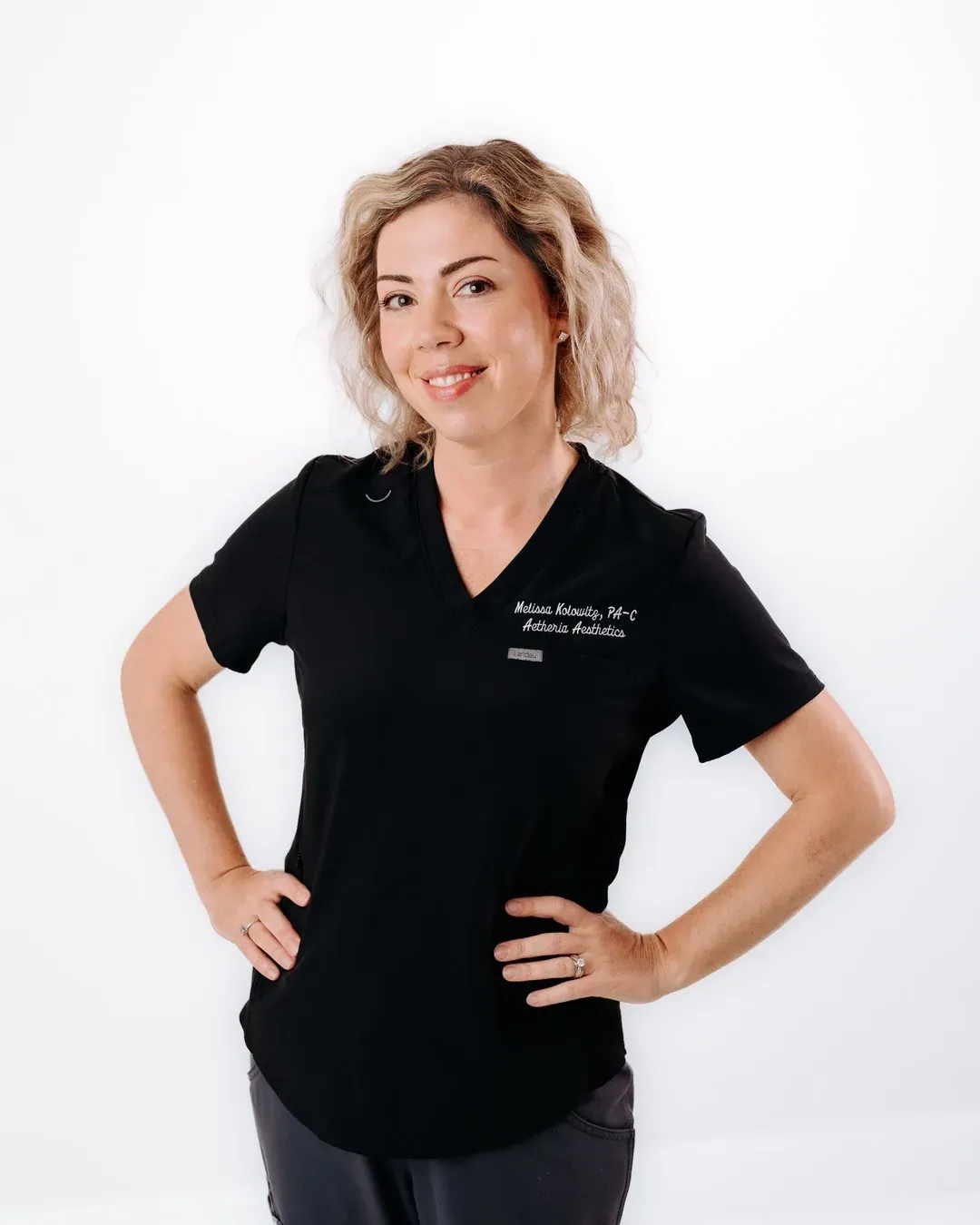
Melissa did a wonderful job listening to my goals and helping me determine what services were right for me. She could have easily convinced me to do more, but she was honest and only suggested what I truly needed.
Had a wonderful consultation with the owner, Melissa. She took her time and walked me through all her services and answered my questions without trying to oversell me.
Let me start by saying Melissa is the kindest, most welcoming professional. Melissa educated me and guided me through every step of my service. I will be returning to try out more treatments.


Common Questions
Straight answers.
What patients ask before booking.
What peptides do you offer at Aetheria?
Five peptide families: NAD+ for cellular and metabolic wellness, sermorelin and ipamorelin as growth hormone secretagogues for body composition and recovery support, tesamorelin for visceral fat pathways (FDA-approved for HIV-related lipodystrophy and commonly used off-label for visceral fat considerations), and GHK-Cu as a copper tripeptide for tissue support. Each is selected based on your labs and clinical history, not as part of a default stack.
Do I need lab work before starting peptide therapy?
Yes. Peptide selection at Aetheria is lab-driven. Baseline metabolic and hormonal panels inform which peptide is appropriate, what starting dose is reasonable, and what follow-up cadence makes sense. We do not select peptides without labs because the selection itself depends on what the labs show. Some peptides require additional follow-up labs to monitor response.
Can I take peptide therapy and a GLP-1 together?
Often, yes. Many patients on semaglutide or tirzepatide consider sermorelin or ipamorelin for body composition support during active weight care. Tesamorelin pathways are reviewed for adults whose labs suggest visceral fat is part of the picture. NAD+ supports cellular wellness alongside GLP-1 therapy. The peptide pathway is paced with your GLP-1 cadence and selected based on your labs, not layered as a default add-on.
Why don't you add NAD+ for every patient?
Because clinical indication matters. NAD+ is a meaningful cellular precursor with widespread roles, but adding it to every patient regardless of labs or clinical picture reduces it from a clinical decision to a marketing decision. We select NAD+ for adults whose labs and clinical history suggest a candidacy, and we are honest with adults for whom NAD+ is not the right starting conversation.
Are peptides FDA approved?
Some peptides are FDA-approved for specific clinical uses. Tesamorelin is FDA-approved for HIV-related lipodystrophy and is commonly used off-label in other contexts based on clinical judgment. Sermorelin has a long clinical history in growth hormone secretagogue therapy. NAD+ is a dietary precursor used in IV and injectable forms in clinical wellness contexts. GHK-Cu is a copper-binding tripeptide used in clinical and cosmetic contexts. The availability of specific peptides, formulations, and dosing depends on current regulatory status, which we review together at consultation.
How long do peptide pathways last?
It depends on the peptide, the indication, and the clinical response. Some pathways are short courses of a few months. Others continue as part of long-term Metabolic Health care indefinitely, with periodic labs and dose adjustments. The decision to continue, taper, or rotate is made in consultation based on your labs and goals, not on a rigid timeline.
By consultation.
We serve patients across Ross Township and Pittsburgh's North Hills, including Wexford, Cranberry Township, Sewickley, and Mars. Book online or call to schedule your initial in-person consultation with Melissa Kolowitz, PA-C.